Economics Association of Malawi (Ecama) has warned that Reserve Bank of Malawi’s (RBM) over-reliance on policy rate hikes to curb inflation cannot be sufficient without complementary structural and fiscal reforms to boost production.
Instead, Ecama executive director Esmie Kanyumbu told the Monetary Policy Technical Forum in Lilongwe yesterday that the RBM should also direct efforts towards supporting the real economy and improving institutional transparency.
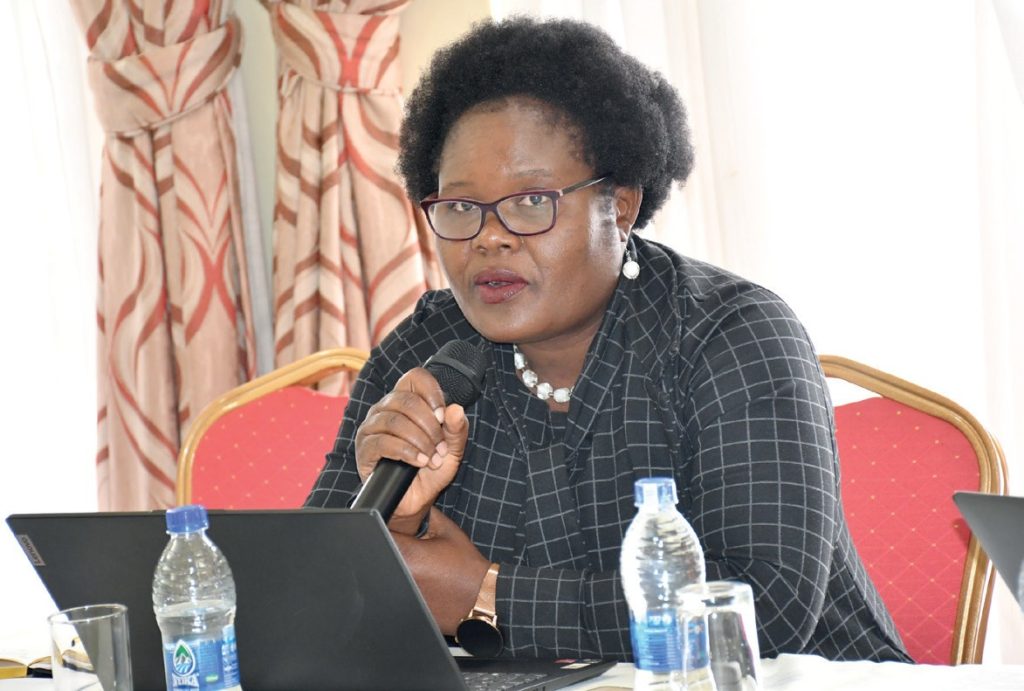
“Aside from using the policy rate, the central bank should prioritise efforts to ensure that there is financing to the real economy,” she said at the forum that attracted economists from the public and private sector and other stakeholders.
Kanyumbu questioned the reliability of RBM’s inflation projections, citing the likelihood of persistent structural risks as the country moves closer to the September 16 General Election.
She said: “Maize prices are expected to remain high in 2025 and fiscal pressures are likely to intensify as we approach the polls.
“The projections appear somewhat optimistic considering these structural risks.”
Kanyumbu further raised concerns over transparency in foreign exchange management, stating that the lack of accurate and timely data on foreign exchange reserves could undermine investor confidence.
Inflation rate stood at 30.5 percent as of March 2025, according to the National Statistical Office, and the RBM forecasts that inflation is expected to average 27 percent this year from 32.2 percent last year.
In his remarks, RBM manager for market analysis and development Chikumbutso Galeta said that while year-on-year headline inflation rate is expected to ease from 32.2 percent in 2024 to 27 percent this year, food inflation has instead edged upwards.
He said: “At the first meeting of the Monetary Policy Committee this year, we expected prices to ease in the second quarter.
“But inflation is proving sticky and supply-side constraints, erratic weather and delays in key programmes such as the Affordable Inputs Programme are keeping upward pressure on prices.”
Galeta said what is further compounding the situation is the recent withdrawal of aid by the United States through the United States Agency for International Development, which is expected to create a significant fiscal gap that government must now absorb.
The US Government was giving more than $350 million (about K612.8 billion) to Malawi annually, according to the United States Department of State.
Two weeks ago, the US government also terminated $350 million Transport and Land Compact after the Millennium Challenge Corporation, a US foreign aid agency, moved to terminate funding.
Nonetheless, the RBM remains cautiously optimistic, projecting that economic growth will rebound to 3.2 percent in 2025 from 1.8 percent in the previous year.
The forecast is premised on improvements in agriculture, mining and services, conditional on stable weather and improved input distribution.
Nico Asset Managers earlier warned that inflationary headwinds will continue to linger, arising from fiscal slippages, weak kwacha, increases in electricity tariffs and higher government expenditure due to the forthcoming September 16 General Election.
With inflation well above RBM’s medium-term target of five percent and key risks looming on the fiscal and political front, the forum highlighted a critical consensus: interest rate adjustments alone will not be enough.